By John Beydler
The 1954 General Election in Cedar County featured the double theft of Jerico ballots.
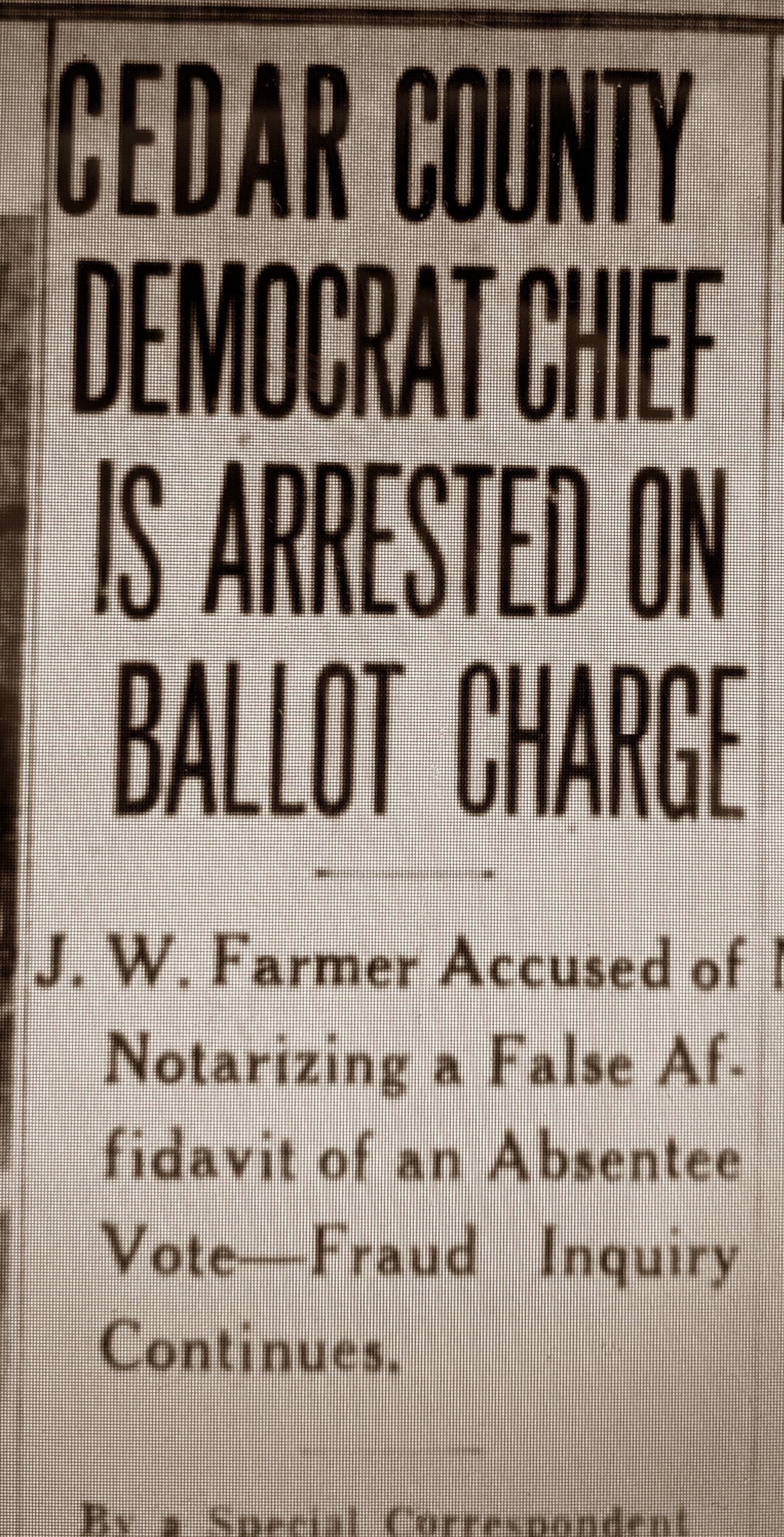
The first occurred even before Election Day when dozens of absentee ballots were obtained and voted without the knowledge or permission of the supposed voters.
The second occurred Feb. 5, 1955, three months after the election. With an investigation into the voting under way, three armed men went to county clerk John Boone’s home in the night, took him to the courthouse in Stockton, forced him at gunpoint to open the safe and took the ballots and related affidavits..
The first theft was laid at the feet of J. W. “Bill” Farmer, the Jerico politician who was Cedar County Democrat chairman and likely the closest thing Cedar County ever had to an old-fashioned political boss.
No one was ever arrested or charged in the second theft, so far as I know. The ballots were never found.
Mr. Farmer was charged with nearly a dozen offenses related to the absentee voting but was eventually cleared after court action in Mount Vernon, Carthage and Kansas City. Prosecut0rs were greatly hampered by the missing ballots and affidavits.
The scheme, as laid out in court proceedings that stretched all the way into 1957, began with Mr. Farmer going to Mr. Boone, the county clerk, and requesting absentee ballots for 81 people. He presented an affidavit stating the 81 had asked him to get the ballots for them, according to the St. Louis Post-Dispatch, which was among the newspapers sending reporters to Stockton to cover the story in-depth.
Though the request apparently was improper – the Post-Dispatch said election law required absentee ballots be handed to the voter in person or be mailed to their home – Mr. Boone, after consulting with Prosecuting Attorney Joe Collins, gave Mr. Farmer the ballots. Both county officials were Republicans.
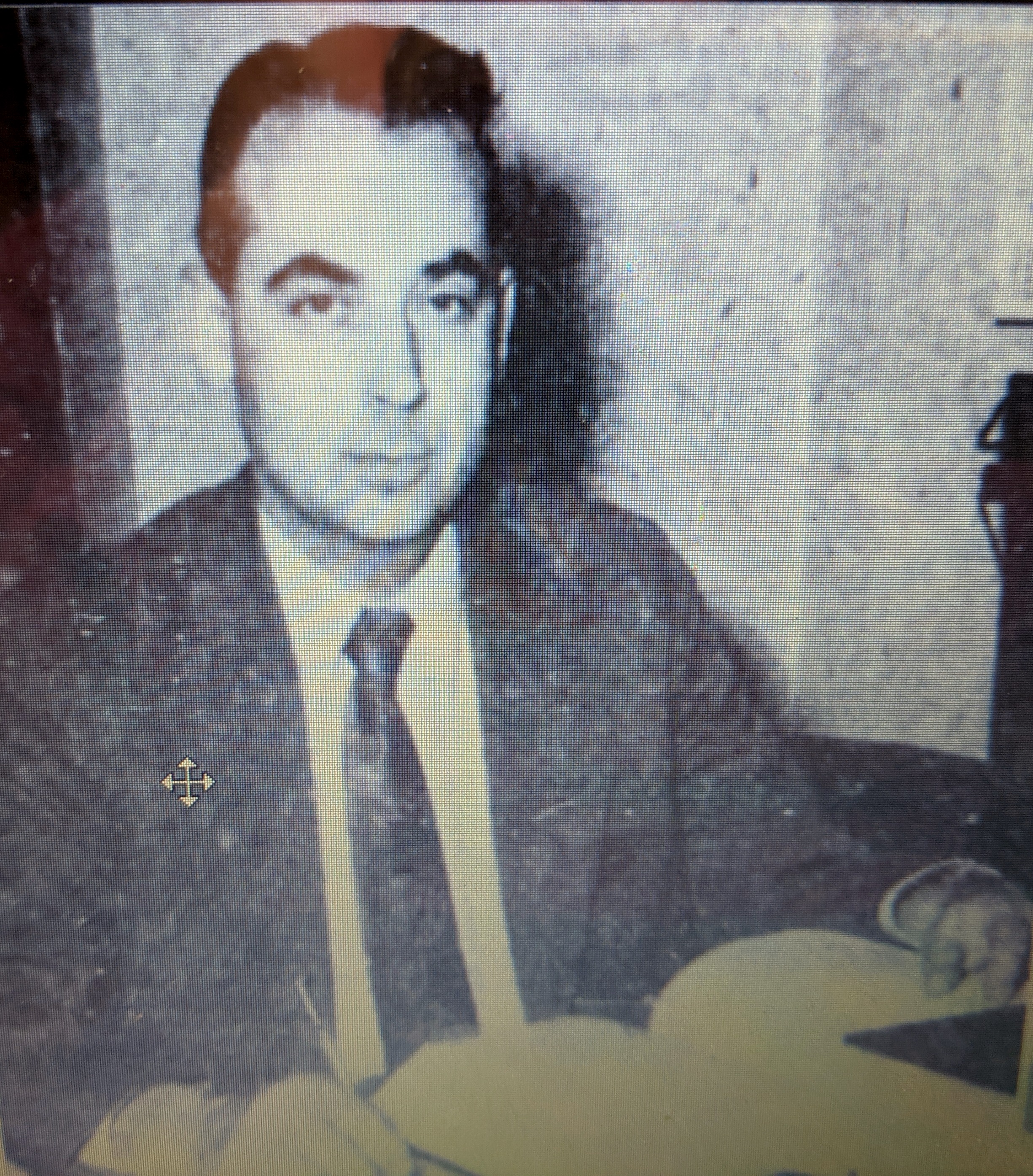
Mr. Collins told the Post-Dispatch he considered the election laws to be “liberal enough to warrant the procedure adopted in Farmer’s case.”
According to testimony in subsequent trials, Mr. Farmer did not take the ballots to the voters; instead he allegedly filled them out, attached affidavits stating the voter had filled them out in his presence, put them all in envelopes and returned them to the clerk’s office.
Mr. Farmer personally notarized 55 of the ballots and Josephine Thompson, a notary in Jackson County (Kansas City) notarized 17 – those of Cedar County residents who allegedly were in Kansas City and would be unable to vote Election Day.
The actual charges that grew out of the scandal were filing false affidavits.
Five or six such counts were filed against Mr. Farmer in Cedar County. He requested a change of venue and two of the cases were transferred to Lawrence County (Mount Vernon) and three or four to Jasper County (Carthage). He was eventually exonerated on all counts.
Four counts were filed against Mr. Farmer in Jackson County, where proceedings played out in the glare of a statewide spotlight provided by the St. Louis and Kansas City papers.
In an April 1956 trial, several people for whom absentee ballots had been cast testified they had not asked Mr. Farmer to get an absentee ballot for them, and had not filled one out, in his presence or anyone else’s. (Two of the these witnesses, I discovered doing this research, were relatives: Lester Beydler, an uncle; and Sam Forest, a first cousin. A more distant cousin, Virgil Beydler, was among three witnesses who testified they had seen Lester Beydler’s ballot before it was stolen. I’m assuming the three were election judges though the story did not say so.)
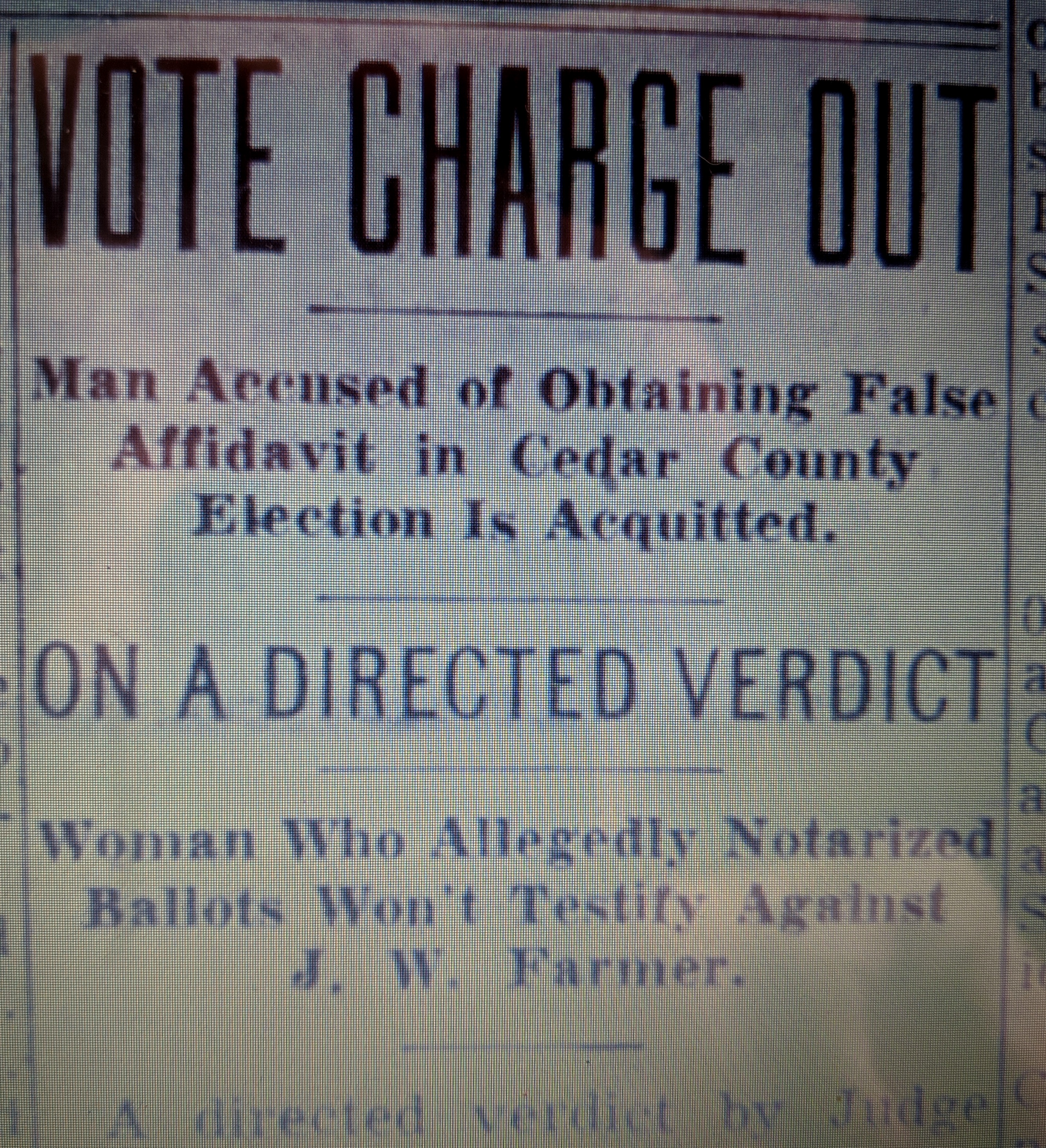
But Mrs. Thompson, the Jackson County notary who had vouched for some of the ballots, and who was billed as the state’s star witness, refused to testify against Mr. Farmer. Instead, she pleaded the Fifth Amendment.
The prosecution attempted to call the Jackson County deputy sheriff who had introduced Mr. Farmer to Mrs. Thompson but the judge refused to permit it on the grounds the deputy had not been on the advance list of witnesses. He then granted a defense motion for a directed verdict of not guilty, the Kansas City Times reported.
Jackson County authorities tried again. In September, 1956, both Mr. Farmer and Mrs. Thompson were indicted on similar charges but on May 2, 1957, a judge granted a defense motion to dismiss the charges on the grounds the indictments failed to state sufficient evidence, according to the Times.
Court outcomes aside, the episode ended Mr. Farmer’s political career, which dated to the 1920s. With sentiment among Cedar County Democrats running strongly against him, he did not seek re-election as Benton Township committeeman in 1958, thus rendering himself ineligible for another term as county chairman.
Though the 1954 election in Cedar County saw a Democrat win a county-wide office for the first time in 26 years, his margin of victory was wide enough that the absentee ballots made no difference, according to the Post-Dispatch.
Note: I was working on a profile of Bill Farmer when I ran across the vast amount of material available on the 1954 election and decided to break it out into a separate story.

