By John Beydler
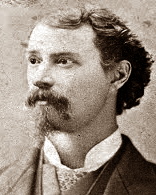
Few people were more intimately involved in Jerico Springs’ founding and growth than Charles E. Whitsitt.
Born in Kentucky in 1848, his family migrated to Missouri in the 1850s. The 1870 Census lists him as a furniture store clerk in Pleasant Hill, southeast of Kansas City. The 1880 Census has him as a married farmer near Milo, south of Nevada.
He soon moved again, to a farm just west of what would soon become Jerico Springs.
When D. G. Stratton began laying out his envisioned health resort town in 1882, Mr. Whitsitt, 34, assisted in drawing the lots, streets and alleys, as well as in cleaning out the springs and planting trees around them to shade the park the founders planned as the new town’s centerpiece.
His house became Jerico’s first – and its first hotel – when he moved it into town in June of 1882. It served until the United States Hotel was built later in the year and the Neumann House was added in 1883, according to Goodspeed Publishing’s 1889 history of Jerico.
Jerico incorporated March 5, 1883, and Mr. Whitsitt was among the entrepreneurs driving its rapid growth as it took 0n aspects of a boom town,racing to an 1890 population 0f 486. Three hotels served health-seekers coming to the springs as well as the flocks 0f traveling salesmen hitting up area farmers, who also were targeted by Jerico’s rapidly expanding retail and service sectors.
Mr. Whitsitt’s early businesses included real estate, loans and insurance. In 1885, he was appointed postmaster, the first of three terms he’d eventually serve.
In 1887, he made what turned out to be his most enduring contribution to Jerico. When his wife, Anna, died at age 36, he donated a tract of land at the town’s southeast corner for a cemetery and buried her there. Named after her, Anna Edna Cemetery still serves Jerico.
Personal tragedy aside, Mr. Whitsitt’s business efforts continued. He was secretary of an early building and loan association, as well as secretary of Jerico Evaporating Co., which provided the means for drying the area’s large fruit crop.
He later owned Jerico Roller Mills, which provided farmers the means to turn grain into flour and livestock feed.
In 1891, he was among the founding board of managers of the Jerico Educational Institute, which was intended to become a regional high school and teachers training institute. It eventually failed.
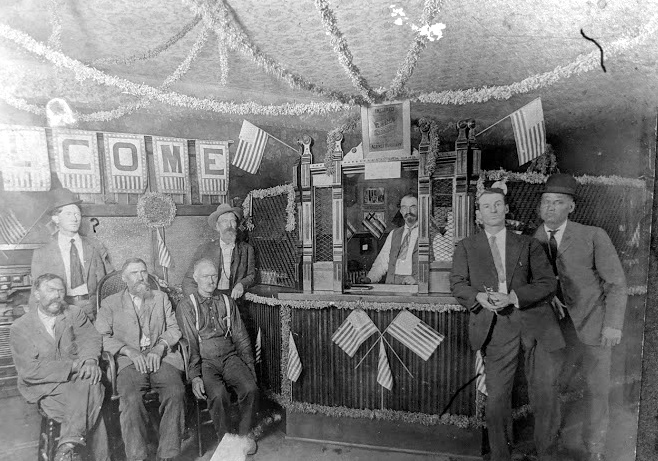
In summer, 1893, when the Hartley Bank, Jerico’s first, collapsed in scandal, Mr. Whitsitt was among the small group of businessmen who banded together to restore banking services.
In the resulting P. Lloyd Banking Co., he was cashier – the person who ran day to day operations. He was to remain at the center of Jerico’s banking life for 23 years.
He resigned from P. Lloyd in 1901 and organized the Bank of Jerico for which he would serve as cashier until it closed in 1916.
For all his efforts to build up Jerico, Mr. Whitsitt failed during 30 years of trying to secure a railroad, which he and other leading lights recognized as critical to the remotely located town’s future. They came close – one chartered railroad even had “Jerico” as part of its name – but in the end all came to naught.
The Bank of Jerico served the town for 16 years, the longest lived of Jerico’s banks. It’s collapse, in 1916, sent shock waves through the town. The Farmers Bank salvaged the Bank of Jerico’s good assets, but there were losses.
Though Mr. Whitsitt apparently bore no legal responsibility for the failure, he nevertheless pledged to make good depositors’ losses. He turned over all his property to benefit depositors, the Stockton Journal reported, second hand.
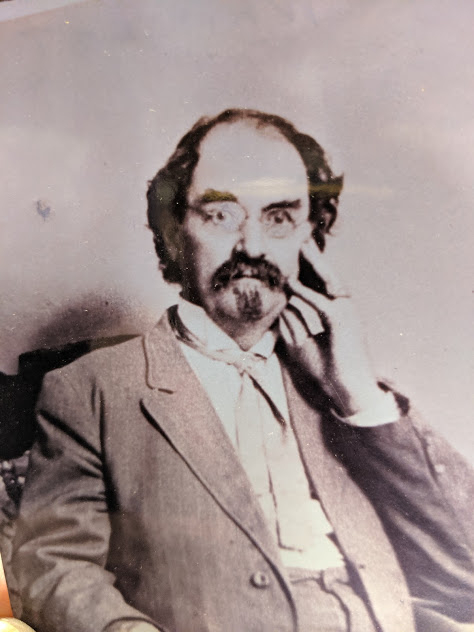
Dr. Bill Neale of El Dorado, a descendant, said in 2019 that Mr. Whitsitt did make payments on the debt for years.
After the bank failed, Mr. Whitsitt moved to Pueblo, Col., where he had long owned land. He was in the real estate business there until his death, in Nevada, Mo., in 1930. He is buried in Pueblo.
Copyright 2020 John Beydler
 Jerico Springs on parade