In 1976, Dr. Bill Neale of El Dorado Springs, who has deep Jerico roots, delivered a lecture 0n Jerico history to the Cedar County Historical Society. It is repr0duced below, minus s0me speculative family history Dr. Neale has since learned was inaccurate. (jcb -2019)
The history of Jerico Springs as a town begins in 1883 on March 5th, but the history of the area starts much further back, of course.
In this talk I am going to deal in some written history, some spoken history, and some pure speculation. When I depart from provable facts I’ll try to let you know. You may disagree with the written history, ignore the speculation, but if you disagree with the oral history you must argue with my panel of experts.
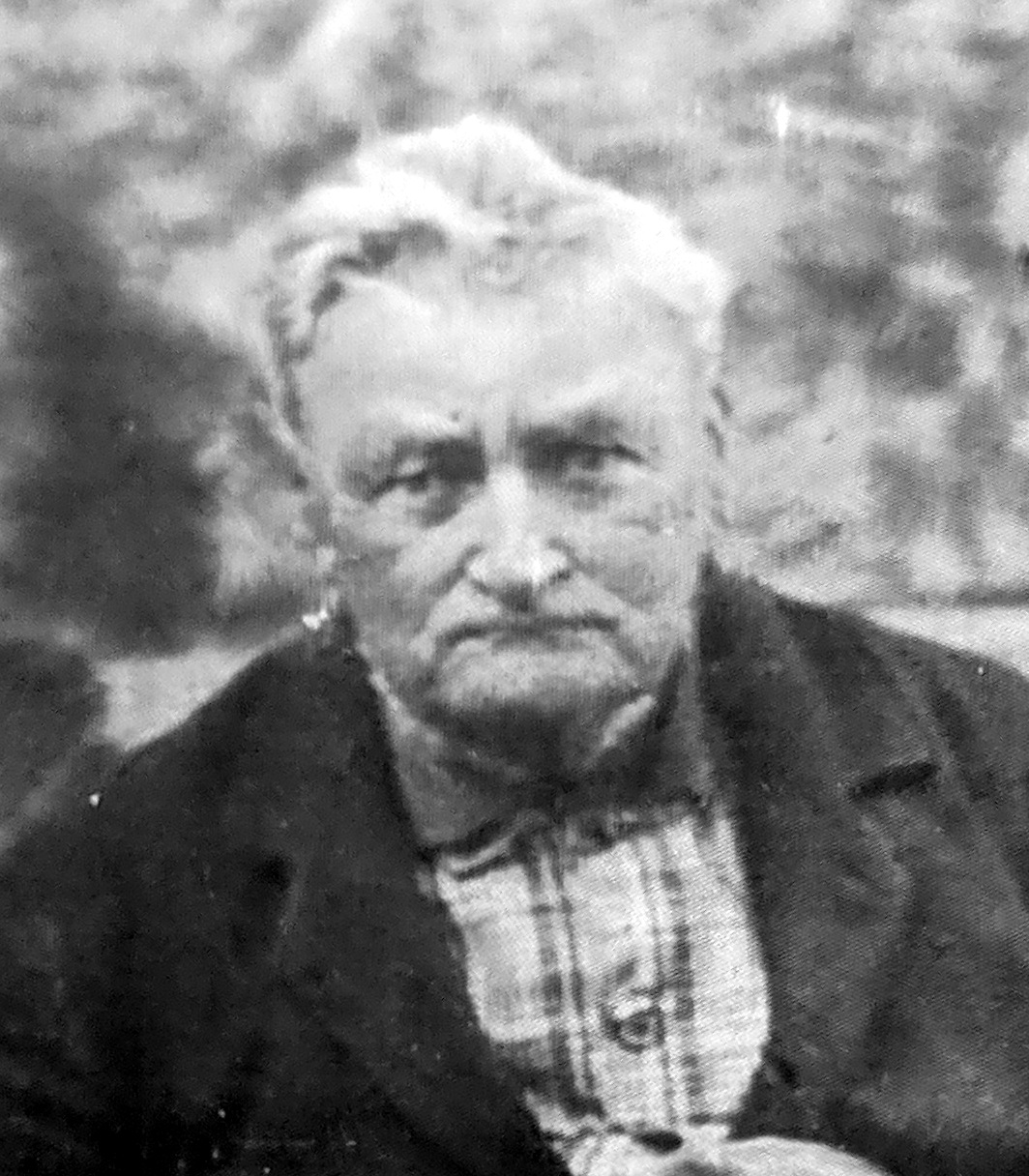
Jerico Springs is the name of the town, and the history of the town as well as its fortunes have always been interwoven with the spring in the park. The name of the spring, however, is Carrico Spring. We in Cedar County often speak of Caplinger Mills, but those of us interested in history must remember that it was originally Caplinger’s Mill. The same is true of Jerico Springs; it was originally Carrico’s Spring. It was so named for Joseph B. Carrico Sr. He was my grandmother’s grandfather.
We don’t know a great deal about him except that, physically, he was a large man, over 6 feet. In complexion he was dark. He was a god-fearing man who was born in 1816 and died in 1898. He had 13 children.
According to family history, he most probably married an Indian. The Indians had long believed in and used the medicinal properties of the springs. They had buried themselves in the mud and drunk the water. The last band was seen in about 1840. After that the only ones seen were small groups traveling at night to visit and worship at their family burying grounds.
In 1856, James Buchanan was elected president, and in 1857 there was a financial crash. In that year Joe Carrico took up land in Township 33 – Range 28: the location of Jerico. In that same year, 96 other people took land in the same township. I don’t know if the financial crash was responsible for this influx of people or not, but it is commonly agreed that Joe Carrico had been there long before he formally laid claim to the land containing the springs, long enough for the springs to be called by his name. (The 1850 census had Mr. Carrico in Cedar County, so he had been there at least 7 years before he filed his claim. Editor)
Also in 1857, a Dr. Bass of St. Louis visited Carrico Springs, and was convinced of the healing properties of the water. He returned to St. Louis to raise money for the project of developing a resort, but the smoke of civil war was on the horizon. Dr. Bass was diverted from his purpose. He entered the war, became wealthy, and lost interest in the project.
Sometime after the war, Mr. D. G. Stratton came to the area from Illinois. He was a bit skeptical of the curative power of the springs but after being healed of a nameless disease, he was converted. He purchased land from Joe Carrico and laid out the town of Jerico Springs. There are several versions of how Carrico Springs became Jerico Springs, running from poor penmanship to just a combination of the two words. I do know that Joe Carrico was a religious man and I suspect that having the town named Jericho (he spelled it Jerico in 1877) would have been pleasing to him. I would also add at this point that he was the third pastor of the Christian Church.
While the town was being laid out by Mr. Stratton, a house was moved from the C.E. Whitsitt farm west of town onto the lot immediately south of where the Methodist Church is now. This was the R. B. Clark residence, and the first nail was driven there on the 9th of June, 1882. From this event comes the annual picnic celebration.
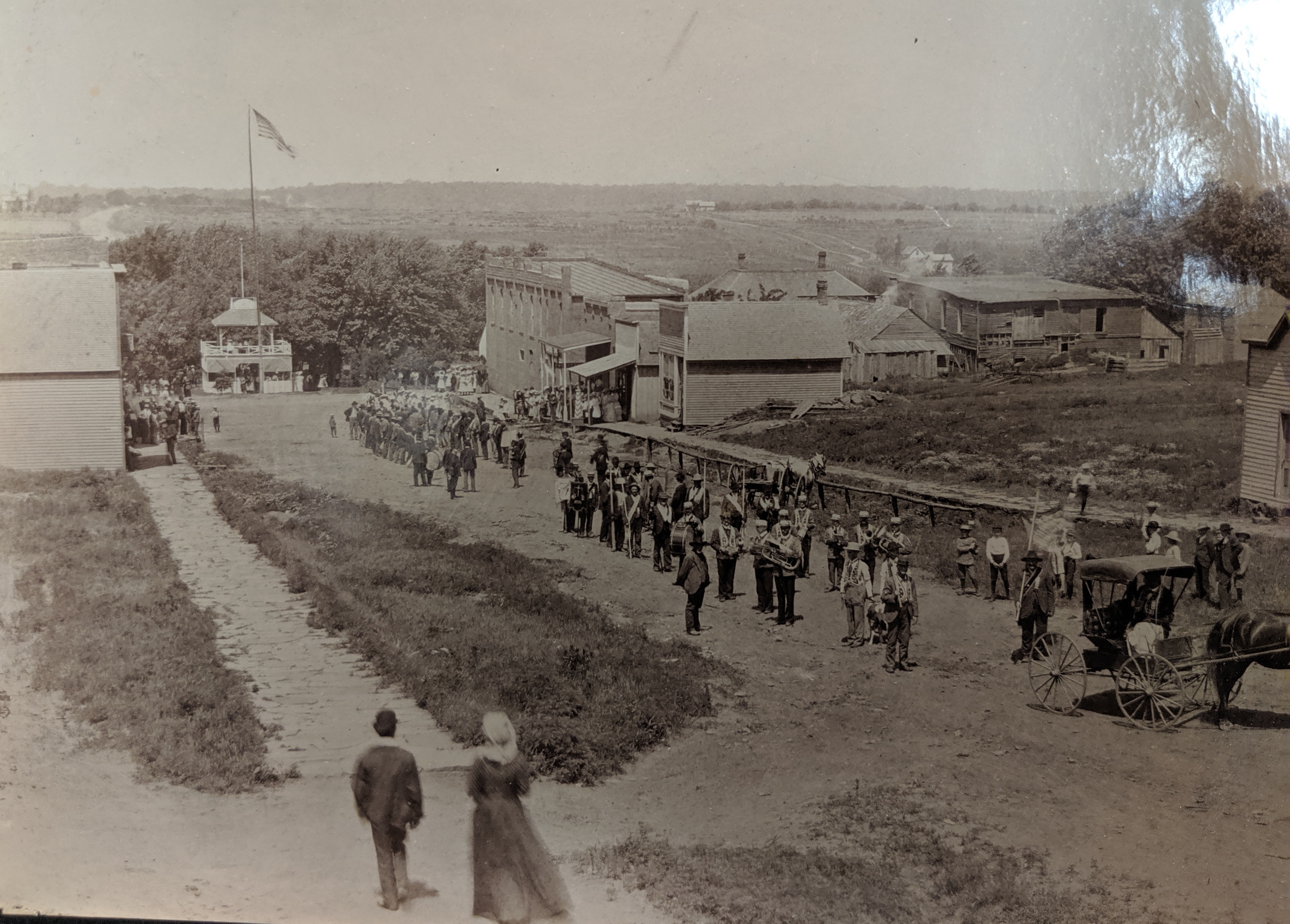
Jerico Springs was a boom town. Seven years after being incorporated in 1883, the population reached 486 by 1890. At that point the population began to decline.
On the 5th of March of the next year the town was incorporated. J. B. Carrico, J. P. Brasher, M. W. Mitchell, George Wallace and A. C. Utterback were the five original trustees of the town.The first business in the town was the James A. Cogle General Store. Other businesses were opened by Hood Shumate, James Rogers, Legg & Heiter, and Clayton. The first drug store was opened by Stratton & Lakey.
Cedar County was established in 1845 at Crow’s Mill. In 1847 the county seat of Lancaster (later renamed Stockt0n) had been established, and by 1883 the county court was surveying roads south to Greenfield, north to Clinton, west to Nevada and east to Fairplay. All these bypassed Jerico. Even so, many people traveled here to do their shopping from all parts of the county and beyond. Commerce reached its zenith here by 1900 to 1910, but by 1900 the population had declined to 443.
Here is a list of businesses as of 1910:
Dry goods and Groceries
Heubein
Isaac L. Arnold
F.M. Davis
J.P. Long
Drugstores
Carendar and Gatos
Dr. A. J. Mynatt
Hardware & Undertaking
Peer Bros.
Mitchell
Nebelsick & Morris
Hotels
Central – M.P. Bush
Neuman
Barbershops
D.R. Nott (Bill Jones)
Elijah Whitehorn
Mills
Jerico Roller Mills
Restaurants
W.H. Hicks
Fred Clawson
Ernest & Mae Smith
Butcher shops
McGuire’s
Lafe Six
Banks
Bank of Jerico – C. E. Whitsitt, cashier
Farmers State Bank – W. A. Carender, cashier
Bakery
Mre. McDoogal
Sorgham Mill
John Coal
Attorneys
F.M. Bruster
E.R. Hightower
Livery Stables
W. C. Davis
Dan McFall Coleman Printy
H.H. Swisher (came later)
Physicians
Dr. A. J. Mynatt
Dr. L. C. Gates
Dr. A. J. Holmes
Dentist
Dr. W.T. Neale
Blacksmiths
Harve Crossland
Hiram Morris
George Morris
Real Estate Offices
Brewster
Hightower
Johnny Jones
J. R. Stampes
Newspaper
Optic
Millinery
Mattie Stephens – Sally
Jewlery Store·
E.B. Cooper
Confectionary
Pat Bridger’s Place
Photography
Bill McGowan – Suttle’s
Candy and Movies
Jap Kyle
Boot and Shoe Repair
Tas Rookwood
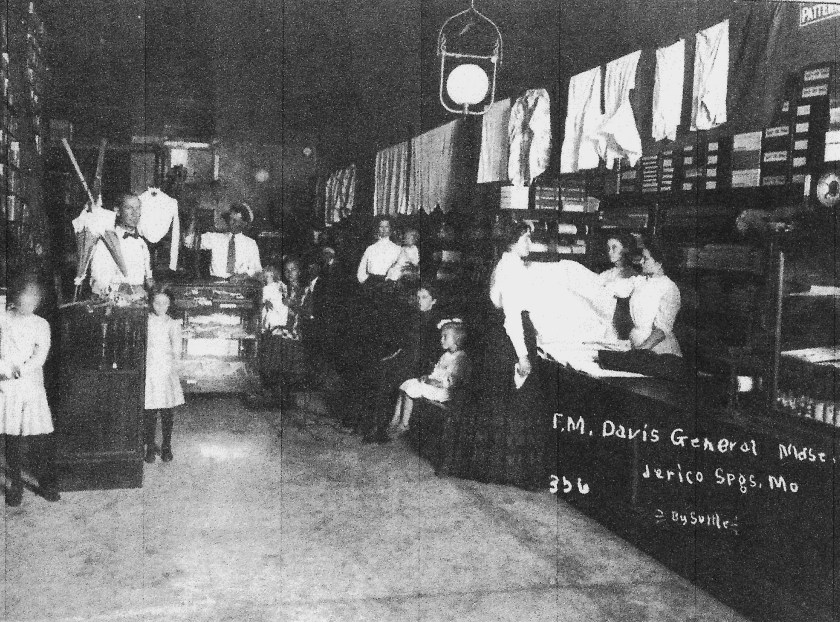
That’s an imposing list of businesses for a town of 395 people, which was the population in 1910. But Jeric0 and the county were losing population. The Jeric0 numbers:
1920 – 262
1930 – 247
1940 – 264
1950 – 235
1960 – 179
1970 – 188
1973 – 193 (est.)
Jerico had four churches:
Methodist Episcopal South, established 1884 – Rev. Trone.
Missionary Baptist, established . 1884 – Elder Horn
Christian, established 1885 Elder Turner
Lutheran, whose date we do not have. The church was located south of town and has since been moved to town. (Editor’s note: The Lutheran congregation disbanded in 1903.)
The original town was bounded on the North by Ridge Street, on the West by Beckley St., on the South by alley south of the buildings facing the park, and on the east by the alley west of thwe post office.
Additions to the town were Stratton’s West, Peer’s , Babbs, Stratton, and Bradley, Stratton’s 3rd, Stratton’s South, Stratton’s College, Whitsitt’s, Whitsitt’s 2nd.
Stratton’s College Addition brings forth some question: And that’s right, Jerico had a college or normal school in the 1890s People came from all over the county for summer post-graduate study and stayed in private homes because there were not enough hotel rooms.
Now how about some firsts?
First election held in Cedar County was in l845: in Benton Township the polling place was in the home of Henry Earl, who also served as judge along with J. B. Carrico and Charles L. Clark.
First Justice of the Peace was Charles L. Clark in Benton Township.
First newspaper was the Jerico News, operated from 1882 to l887 by Col. A. M. Crockett.
First Automobile was brought in by Frank Bruster. It was a 1908 International. Bruster, his son Wyatt and Joe Carrico, son of J.B., went to Springfield to get it. The first day they made it back as far as Greenfield. There they had to send back to Springfield for a mechanic and repairs. The next day saw them as far as Lockwood. The following day after having a blacksmith thaw out the carburetor, they got wihin 12 miles of Jerico before becoming stuck in the mud. A farmer with a team pulled them the rest of the way. In 1910, Bruster took the car to Oklahoma and sold it to an Indian.
The first bank was established in March, 1884, by Hartley Banking Co.
Some customs:
During funerals, the church bell was tolled from the time the family left home until arriving at the church.
In the summer time, any group wishing to raise money served ice cream and cake in the park, and in the winter it was oyster stew and crackers from a barrel.
On the morning of the 9th of June exactly 6:00 a.m. an anvil was fired to herald the starting of the annual picnic.
Christmas trees in the homes were unknown. A large tree was placed and decorated in the church and presents were exchanged there.
In summer, family fishing parties to nearby streams were common, as were large parties in the winter. All events were family affairs.
Can anyone here remember the games of “Go Sheepy Go”, “Kick the Picket”, and “Tally I. C.”?
Concerts in the band stand in the park were as traditional in Jerico as in El Dorado Springs. Generally they were led and most of the musicians provided by the Haden and Morris families. The present bandstand is not the original, which had a steeple with a ball on top.It is said the ball was badly damaged by late night revelers who were also good shots.
Jerico had two school buildings. You will find pictures of them on the back of the school song composed by Rev. J. A. Lowe and published by Mrs. Violet Sitton. You will notice that each had a steeple removed.
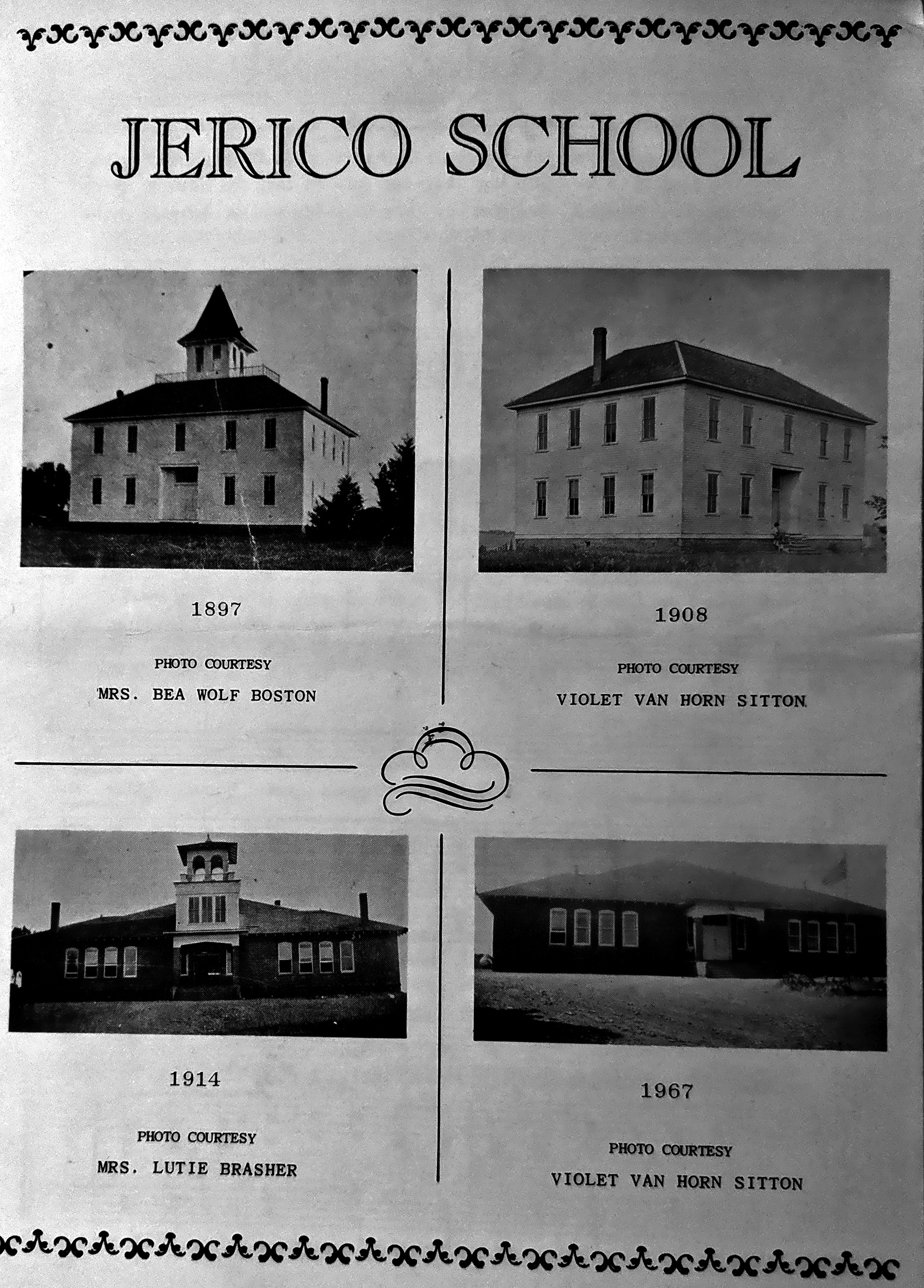
The school sits on the hill south of town across the Jordan River. Everything south of the river is known as Jerusalem, of course. Many are still around who remember the making of the bricks for the present building along the river bank jusr east of the road leading the school.
Cemeteries:
There are four cemeteries which have mainly served the citizens: Zion, already mentioned which was south of town and provided resting places for the German community; Brasher, which is northwest of town; Greenwood, west of town; and Anna Edna located south of town.
Upon the death of his first wife, Anna Edna Clayton, C. E. Whitsitt donated the land for the cemetery, and she was the first one buried there. Charley Whitsitt at one time operated the Jerico Roller Mill, the only business in Jerusalem, and was later the cashier of Bank of Jerico Springs. He was also three times the postmaster of Jerico.
A tornado struck Jerico in May of 1896, on a Sunday mormng during worship services. The first place hit was the R. B. Clark residence, the first building in the town. Mrs. Clark was at home and was killed. It next hit and demolished the Methodist Church.
There were a few very minor injuries, but the pews and the heavy chairs behind the pulpit supported the roof, which remained intact, thus saving the of the choir and congregation. Dr. A. J . Mynatt’s residence across the street was left untouched and is today the beautiful home of Cleo Brown.
Bath Houses were located at one time both north and south of the park. My grandmother, Jessie Davis, was stricken as a young girl with rheumatoid arthritis. As the granddaughter of J. B. Carrico, it is fitting that she was loaded into a wagon padded with straw and brought into town for baths at the north bath house. She was returned to health by the baths.
In the last 15 years, Jerico has again grown in population and bids fair to becoming a retirement community. Perhaps it is time for some entrepreneur like D. G. Stratton restored the bath house and made the curative powers of the Carrico Springs available to the public.
Just one bit of advice to those of you who may be encouraged to try the water. Unless you wish to be branded a foreigner, be sure to drink from the south pipe. The north one comes from blue clay, but he south one comes from iron, and any native knows it is the best to drink.
 Jerico Springs on parade
John; The only change I would is “Christmas trees in the homes were unknown”Bill
LikeLike
Done. Thanks again.
LikeLike
My mother was born and raised in Jerico. In a strange lineage with my life and this article, oyster stew with crackers is a family favorite that I was raised with. While not a “normal” family entree, one can only speculate that this meal was associated with fun and gathering during it’s repeatance. Though I love the taste, I can, without a shadow of doubt, say this family tradition most likely started with this gathering. This collection you have started has sparked so many recollection from my childhood. I will reach out personally in the very near future as there are still roots of Jerico that must be recorded–
Anonymous
LikeLike